.png)

Going For Gold!
- Esther Joannes
- Sep 14, 2025
- 6 min read
Updated: Nov 6, 2025
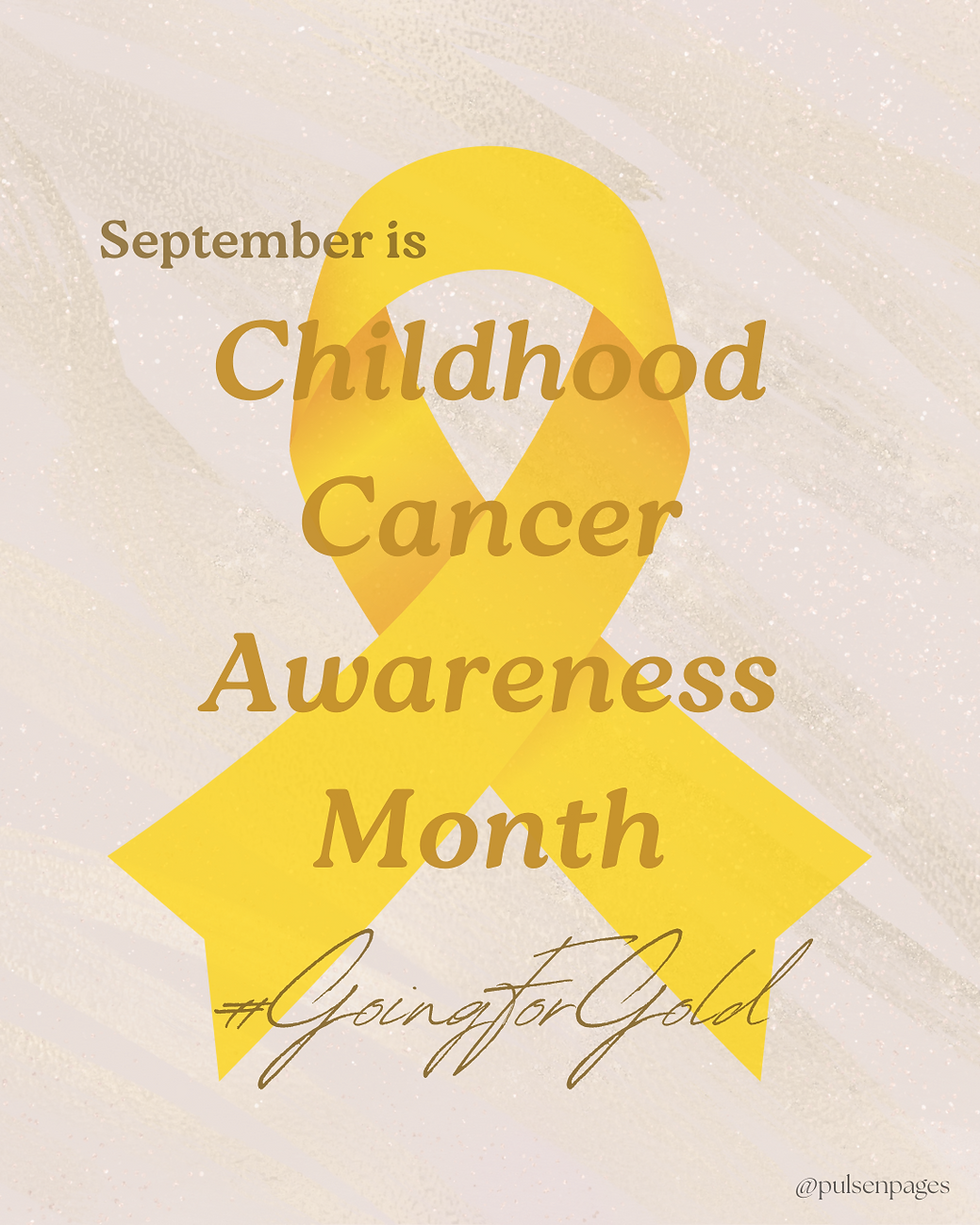
Every two minutes, a child somewhere around the world is diagnosed with cancer; a disease that doesn't care about age, innocence, or milestones yet to come. Behind every diagnosis is a story of strength, resilience, and hope.
With September being Childhood Cancer Awareness Month, it’s important to shine a light on the realities these young fighters and their families face everyday. In this post we’re going to be digging deeper into the facts, funding gaps, and everything you need to know about Childhood Cancer. Whether you know someone affected, are just curious, or learning about this for the first time; this month is an opportunity to not just be aware, but to get involved.
WHAT IS CHILDHOOD CANCER?
Childhood cancer is cancer that affects children from infancy to age 14. Most of which are caused by mutations in the child’s DNA that occur early in life, sometimes even before birth. As a result, there are few established risk factors or prevention strategies for childhood cancer. According to WHO, “cancer is a large group of diseases that can start in almost any organ or tissue of the body when abnormal cells grow uncontrollably, go beyond their usual boundaries to invade adjoining parts of the body, or spread to other organs.”. Although studies show that cancer death rates in this age group have declined significantly by 70% from 1970 through 2020, it remains the leading cause of children and adolescent deaths.
DIAGNOSING CHILDHOOD CANCER
Cancers in children are often discovered by parents or doctors, or during tests for a different issue. There are no recommended screening tests for children at average risk of cancer, but if a child has inherited gene mutations increasing their risk, a genetic counselor may be recommended.
Some common signs include: new lumps or swelling, extreme fatigue, persistent bleeding, pain without a clear cause, stumbling, unexplained fever, frequent headaches, sudden eye or vision changes, a milky white color behind the eye, and weight loss. These symptoms may be hard to notice due to their association with other illnesses or injuries. If symptoms persist or don't improve, it's recommended to consult a doctor, as most are more likely to be caused by something other than cancer. A doctor examines a child’s medical history, signs, and symptoms, and may suggest blood or imaging tests. If a lump is found, a biopsy is performed to test for cancer, with various methods depending on the location of the lump.
Early detection and treatment are crucial for improving outcomes of childhood cancer. Early diagnosis involves awareness of symptoms, accurate clinical evaluation, diagnosis, staging, and access to prompt treatment. Programs promoting early and correct diagnosis have been successful in countries of all income levels, often through collaboration between governments, civil society, and nongovernmental organizations. Screening is generally not helpful for childhood cancers, but can be considered in high-risk populations. However, there is no high quality evidence to support population-based screening programs in children.
The most common types of childhood cancer are:
- Acute lymphocytic leukemia
- Brain cancer
- Neuroblastoma
- Non-Hodgkin lymphoma
But there are several other types
TREATMENT
Treatment for cancer in children requires accurate diagnosis, appropriate therapy, and a multi-disciplinary team. Access to essential medicines, pathology, blood products, radiation therapy, technology, and psychosocial care is variable and inequitable. However, cure is possible for over 80% of children with cancer when services are accessible. Palliative care relieves symptoms and improves the quality of life for patients and their families. It can be delivered through community and home-based care, providing pain relief and psychosocial support. Adequate access to pain medicines is crucial for moderate to severe cancer pain.
Immunotherapy for Childhood Cancer?
Advances in immune-based therapies have improved survival rates for young people with childhood cancer. New immunotherapy approaches offer hope for more effective treatment without the damaging side effects of conventional treatments.
Currently, five FDA-approved immunotherapy options for childhood cancer include targeted antibodies, such as Blinatumomab (Blincyto®), Dinutuximab (Unituxin®), Rituximab (Rituxan®), Ipilimumab (Yervoy®), Pembrolizumab (Keytruda®), and Adoptive Cell Therapy (Tisagenlecleucel AKA CAR T 19 (KYMRIAH®), and several immunotherapies under evaluation in clinical trials.
Cancer Research Institute is investing in various projects to improve treatment options, such as exploring ways to perform transplants without chemotherapy or revealing new insights about the relationship between cancer and the immune system. Researchers are also exploring ways to improve stem cell transplants by eliminating the need to wipe out a patient's existing immune system before treatment.
STATS
Stats by WHO show that around 400,000 children and adolescents aged 0-19 develop cancer each year. Over 80% of children with cancer in high-income countries are cured while in low to middle-income countries, less than 30% of children with cancer are cured. This is due to lack of diagnosis, misdiagnosis, obstacles to accessing care, abandonment of treatment, toxicity, and relapse. Only 29% of LMICs have access to cancer medicines compared to high-income countries which is 96%.
The American Cancer Society and the National Cancer Institute predict that the cancer survivor population in the United States will increase to more than 22 million by 2035. As of January 1, 2025, 18.6 million people in the United States were still alive despite a cancer diagnosis, with prostate, melanoma, and colorectal cancers having the greatest survival rates. The researchers emphasize the issues of long-term health and supportive care for cancer survivors.
FUNDING GAPS
Childhood cancer funding gaps are widespread, particularly in low- and middle-income countries, due to inadequate public financing, centralized procurement, and poor integration into national cancer plans. Over 90% of childhood cancer cases occur in these regions, with survival rates significantly lower than in high-income countries. Centralized procurement issues, lack of integration into national plans, and insufficient research funding contribute to these gaps. Initiatives like the WHO Global Platform for Childhood Cancer aim to address these issues by improving access to essential medicines and diagnostic tools in vulnerable regions. Budgeting tools like CC-BRIDGE and non-profit organizations like Solving Kids' Cancer focus on funding high impact clinical research for high risk pediatric solid tumors.
SPOTLIGHTS
The World Health Organization launched the Global Initiative for Childhood Cancer in 2018 with St. Jude Children's Research Hospital to support governments in building high-quality childhood cancer programs. The goal is to achieve at least 60% survival for all children with cancer by 2030, doubling the current cure rate and saving 1 million lives over the next decade.
To learn more visit: https://www.stjude.org/global/collaborating-to-cure/global-initiative.html
The Pan American Health Organization and St. Jude Children's Research Hospital is collaborating with Ministries of Health, pediatric oncologists, and foundations to develop National Childhood Cancer Plans.
To learn more visit: https://www.paho.org/en/partnerships/st-jude-childrens-research-hospital-childhood-cancer-americas
El Salvador conducted an assessment mission from April 23-25, 2025, to assess its readiness to implement the Global Platform for Access to Childhood Cancer Medicines, focusing on governance, minimum standards, and collaboration among stakeholders, emphasizing the role of civil society.
To learn more visit: https://www.paho.org/en/news/2-5-2025-salvador-progress-access-childhood-cancer-medicines
HOW YOU CAN HELP
Raising awareness for childhood cancer doesn’t have to be complicated. Every effort, big or small, makes a difference. Here are some meaningful ways you can get involved this September:
- Wear Gold
Gold is the color of childhood cancer awareness. Show your support by wearing gold ribbons, clothing, or accessories throughout the month. Share your photos on social media to spread the word.
- Share Stories
Use your platform. Whether it’s social media, a blog, or conversations with friends, highlight the stories of children and families affected by cancer. Raising awareness helps shine a light on their courage and needs.
- Fundraise or Donate
Support organizations that fund research and provide resources for families. Even small donations can have a big impact, and hosting a fundraiser at school, work, or in your community can multiply that impact.
- Volunteer
Offer your time at local hospitals, cancer centers, or nonprofit events. Volunteering is a powerful way to provide hope and encouragement to children and families.
- Advocate for Research
Contact your local representatives to urge them to prioritize funding for childhood cancer research. Policy change begins with people speaking up.
- Educate Yourself
Learn more about childhood cancer, its signs, treatments, and challenges. Awareness is the first step toward action.
Together, these small acts can create a ripple effect of hope, support, and change for children battling cancer and their families.
DISCLAIMER*
I am not a licensed medical professional. The content on this blog is for informational and educational purposes only, and is not intended as a substitute for professional medical advice, diagnosis, or treatment. Always seek the advice of your physician or other qualified health provider with any questions you may have regarding a medical condition
SOURCES
Childhood cancers. (2025, April 24). Cancer.gov. https://www.cancer.gov/types/childhood-cancers
Childhood Cancer Facts - Pediatric Cancer Research Foundation. (n.d.). Pediatric Cancer Research Foundation. https://pcrf-kids.org/facts-childhood-cancer/
World Health Organization: WHO. (2025, February 4). Childhood cancer. https://www.who.int/news-room/fact-sheets/detail/cancer-in-children
El Salvador: Progress in access to childhood cancer medicines. (2025, May 2). PAHO/WHO | Pan American Health Organization. https://www.paho.org/en/news/2-5-2025-salvador-progress-access-childhood-cancer-medicines
ST JUDE CHILDREN’S RESEARCH HOSPITAL- Childhood Cancer in the Americas. (n.d.). PAHO/WHO | Pan American Health Organization. https://www.paho.org/en/partnerships/st-jude-childrens-research-hospital-childhood-cancer-americas
WHO Global Initiative for Childhood Cancer. (n.d.). St. Jude Children’s Research Hospital. https://www.stjude.org/global/collaborating-to-cure/global-initiative.html
Cancer Research Institute. (2025, April 29). Childhood Cancer - Cancer Research Institute. https://www.cancerresearch.org/immunotherapy-by-cancer-type/childhood-cancer

Very rich content. Great job