.png)

Invisible Pain - Why Women's Health Issues are Still Dismissed
- Esther Joannes
- Mar 8
- 3 min read
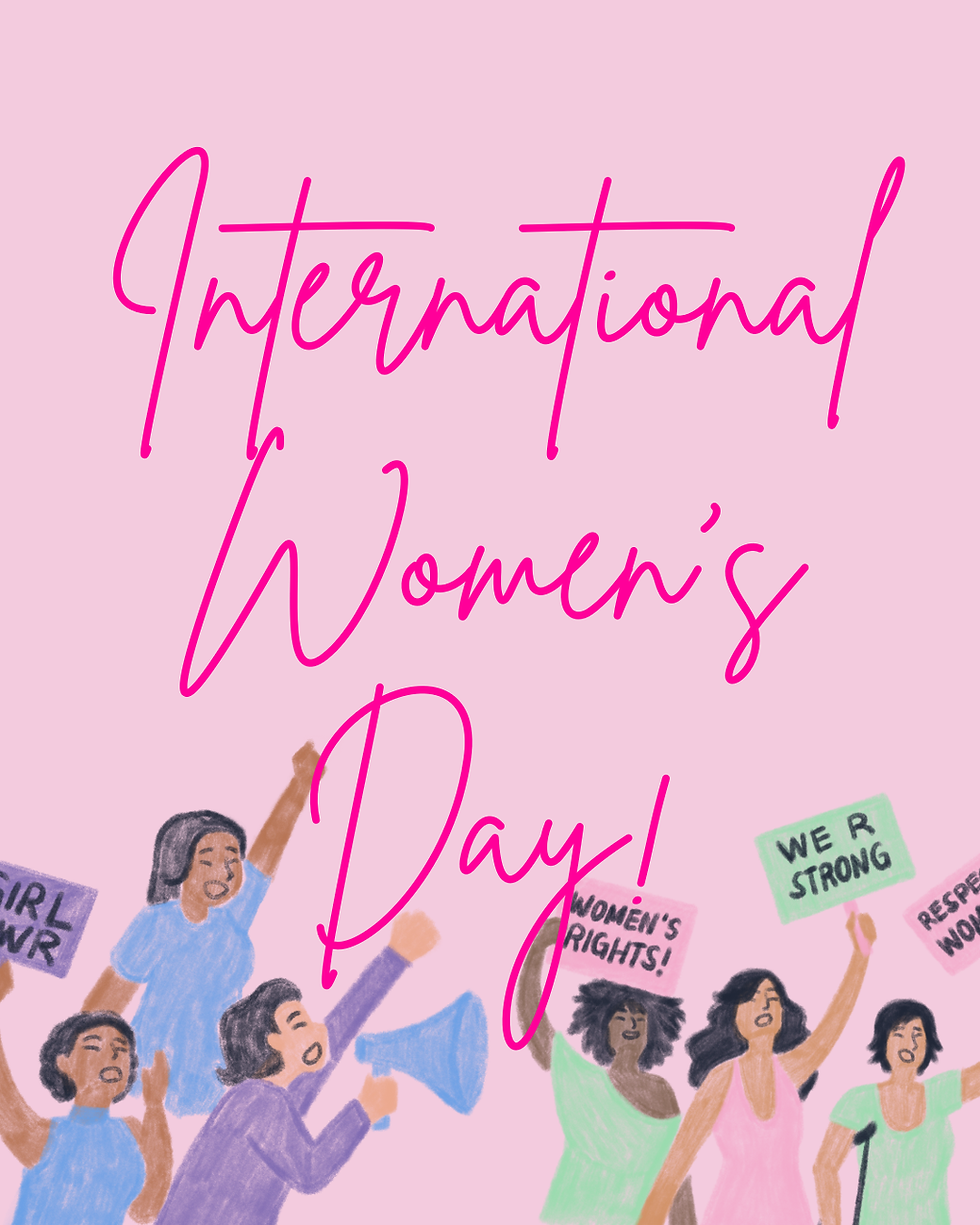
For generations, women have been told that their pain is “normal”, “exaggerated” or “in their heads”. Despite medical advancements, gender bias in healthcare remains a global issue, leading to delayed diagnoses, untreated symptoms, and unnecessary suffering. Conditions such as endometriosis, PCOS, and PMDD are often ignored or misdiagnosed, not because they’re rare, but because women’s experiences continue to be devalued in medical spaces.
The dismissal of women’s pain can be traced back to century old gender stereotypes. In the 19th century, physicians coined the term “hysteria” to describe a wide range of emotional or physical symptoms in women. Though the term is obsolete today, its legacy persists in how women’s health complaints are perceived.
Research shows that women wait on average 33% longer than men for the same emergency treatment because their symptoms are more likely to be attributed to psychological causes rather than physiological ones.
ENDOMETRIOSIS AND THE 7-YEAR WAIT
Endometriosis is a condition where uterine tissue grows outside the uterus. It affects roughly 10% of women worldwide, yet diagnosis often takes 7 to 10 years. Many patients are told their pain is simply “bad cramps” or “part of being a woman”.
The lack of early intervention leads to fertility challenges, chronic inflammation, and significant mental health effects. A study in The Journal of Psychosomatic Obstetrics & Gynecology found that women with endometriosis experience twice the rate of depression and anxiety compared to those without.
THE BIAS IN PAIN PERCEPTION
Pain studies reveal that physicians often underrate women’s pain intensity and are more likely to prescribe sedatives instead of pain relief. Implicit gender bias, even though often unconscious, influences diagnosis and treatment quality.
The issue is even more pronounced for women of color, who face racialized stereotypes about pain tolerance and strength. Black women, for instance, are three times more likely to die from pregnancy-related causes in the U.S. than white women.
The Psychological Toll
Being dismissed by a medical professional has emotional consequences. Many women report feeling gaslit, doubting their own symptoms or avoiding future care out of frustration. This emotional exhaustion adds another layer to already complex conditions.
MOVING TOWARDS CHANGE
Medical education reform: Bias awareness must be integrated into training programs.
Patient advocacy: Women should feel empowered to seek second opinions and demand diagnostic testing.
Research equality: More funding for female-centered studies, especially in reproductive and chronic pain conditions.
Intersectional awareness: Understanding how race, culture, and gender intersect in healthcare.
Research consistently shows disparities in how women’s symptoms are assessed and treated. These patterns are not anecdotal; they are systemic. Addressing them is essential to improving diagnostic accuracy and health outcomes.
This International Women’s Day, we are reminded that believing women is not an act of kindness, it is a medical necessity. Women deserve to be heard, taken seriously, and treated with the same urgency and respect as anyone else in healthcare spaces.
Advocating for women’s health means challenging outdated biases, investing in research, and creating systems where women’s pain is never dismissed as “normal.” Because when women’s voices are trusted, lives are improved, diagnoses come sooner, and care becomes truly equitable.
DISCLAIMER*
I am not a licensed medical professional. The content on this blog is for informational and educational purposes only, and is not intended as a substitute for professional medical advice, diagnosis, or treatment. Always seek the advice of your physician or other qualified health provider with any questions you may have regarding a medical condition.
SOURCES
Approaching hysteria : disease and its interpretations : Micale, Mark S., 1957- : Free Download, Borrow, and Streaming : Internet Archive. (1995). Internet Archive. https://archive.org/details/approachinghyste0000mica/page/n9/mode/2up
Gambadauro, P., Carli, V., Hadlaczky, G., & Segebladh, B. (2019). Depressive symptoms among women with endometriosis: A systematic review and meta-analysis. Journal of Psychosomatic Obstetrics & Gynecology, 40(4), 273–282.
Hoffmann, D. E., & Tarzian, A. J. (2001). The girl who cried pain: A bias against women in the treatment of pain. Journal of Law, Medicine & Ethics, 29(1), 13–27.
Hoyert, D. (2025). Maternal Mortality, 2023. https://doi.org/10.15620/cdc/174577
Samulowitz, A., Gremyr, I., Eriksson, E., & Hensing, G. (2018). “Brave men” and “emotional women”: A theory-guided literature review on gender bias in health care and pain. Pain Research and Management, 2018, 1–14.
World Health Organization: WHO. (2020, October 28). Women’s health. https://www.who.int/health-topics/women-s-health
World Health Organization: WHO & World Health Organization: WHO. (2025, October 15). Endometriosis. https://www.who.int/news-room/fact-sheets/detail/endometriosis

Lovely, captivating and direct-to-the-point write up. Well done.
I join my voice to this call to advocacy for the “pain” to be heard and gain in medical advancement in the treatment of Endometriosis, PCOs, PMDD.
Wow very insightful. Happy women’s day!